
IPTV, or Internet Protocol Television, refers to television content delivered over an Internet Protocol (IP) network, rather than through traditional satellite or cable formats. This technology enables the delivery of both live and on-demand content directly to your devices, revolutionizing the way people consume television.
The global IPTV market size was estimated at USD 68.84 billion in 2023 and is projected to reach USD 200.22 billion by 2030. As IPTV services continue to grow, they offer a range of benefits, including on-demand capabilities and interactive viewing experiences. By understanding IPTV, you can make informed decisions about your television viewing options.
Key Takeaways
- IPTV delivers television content over the internet, offering live and on-demand options.
- The technology provides high-quality streaming directly to your devices.
- IPTV services are projected to reach USD 200.22 billion by 2030.
- Key features include on-demand capabilities and interactive viewing experiences.
- Understanding IPTV can help you make informed decisions about your viewing options.
Understanding IPTV: The Modern Television Revolution
IPTV represents a significant shift in how we access and enjoy television content. Unlike traditional broadcast methods, IPTV services deliver live TV channels, movies, and videos through an active internet connection, allowing viewers to watch their favorite programs on various devices, including TVs, computers, smartphones, and tablets.
The technology behind IPTV enables a two-way interactive experience, offering features like pause, rewind, and program recording that traditional one-way broadcast systems cannot match. This interactivity is a game-changer for viewers who value control over their viewing experience.
- Moving away from traditional broadcast methods to internet-based streaming technology.
- Giving viewers unprecedented control over what, when, and where they watch their favorite channels and programs.
- Enabling a two-way interactive experience with features like pause, rewind, and program recording.
- Fitting into the broader streaming entertainment landscape while offering distinct advantages through its managed network approach.
- Delivering hundreds of channels through your internet connection, making it a flexible, feature-rich alternative to traditional cable and satellite providers.
As IPTV services continue to evolve, they are becoming an increasingly popular choice for cord-cutters and streaming enthusiasts. With the ability to stream content on-demand and access a wide range of channels, IPTV is redefining the television entertainment landscape.
| Feature | Traditional TV | IPTV |
|---|---|---|
| Content Delivery | Broadcast signal | Internet connection |
| Device Compatibility | Limited to TV | Multiple devices supported |
| Interactivity | Limited | Highly interactive |
As we explore the world of IPTV, it’s clear that this technology is revolutionizing the way we consume television entertainment, offering a more personalized, flexible, and engaging experience.
How IPTV Works: The Technology Behind Internet Television
IPTV technology revolutionizes television viewing by leveraging internet protocol to deliver content. Unlike traditional broadcast methods, IPTV uses the internet to stream television programs and videos directly to viewers.
At its core, IPTV works by converting television signals into data packets that can be transmitted over IP networks. This fundamental difference from traditional broadcast signals allows for more flexible and personalized viewing experiences.
IPTV Architecture Explained
The IPTV architecture consists of several key components that work together to deliver seamless streaming. These include content acquisition systems, storage servers, a content delivery network, and client-side applications. When you select a channel or program, your request travels through the internet to the provider’s servers, which then stream the requested content back to your device in a continuous flow of data packets.
The Content Delivery Process
The content delivery process in IPTV involves sophisticated encoding, compression, and transmission technologies. These technologies optimize video quality while minimizing bandwidth requirements, ensuring smooth playback even during peak usage times. IPTV services often use managed private networks that prioritize video traffic, resulting in more stable streams with less buffering and higher quality.
When it comes to delivering content, IPTV employs different transmission methods. Live broadcasts typically use multicast transmission to efficiently deliver the same content to multiple viewers simultaneously. On the other hand, video-on-demand services often use unicast transmission, where content is delivered directly to individual users. This flexibility in content delivery allows IPTV providers to manage their network resources effectively, ensuring a high-quality viewing experience for their users.
Types of IPTV Services Available Today
The IPTV landscape is rich with different service types, each designed to offer a unique viewing experience. These services cater to various viewing preferences and content consumption habits, ensuring that there’s something for everyone.
Video on Demand (VOD)
Video on Demand services provide access to extensive libraries of movies, shows, and other content that you can watch at your convenience. Similar to platforms like Netflix, VOD services are often integrated within your IPTV subscription, offering a vast array of content to choose from whenever you want.

Time-Shifted Media
Time-Shifted Media allows you to catch up on recently aired content, typically within a 7-day window. This feature ensures that you never miss your favorite shows even if you couldn’t watch them live. It’s a convenient option for those with busy schedules or who prefer to watch content at a later time.
Live IPTV Streaming
Live IPTV streaming delivers real-time broadcasts of sports events, news channels, and entertainment programming. This service mimics traditional TV but uses your internet connection instead of cable or satellite. For those interested in finding IPTV services with local channels, live streaming is a crucial feature.
Many modern IPTV services combine all three types into comprehensive packages, giving you the flexibility to watch live channels, catch up on missed content, or browse on-demand libraries all through a single service. This versatility makes IPTV an attractive option for a wide range of viewers.
What Are IPTV Services Compared to Traditional TV?
The rise of IPTV services has sparked a comparison with traditional TV, highlighting significant differences in how content is delivered and consumed. As viewers increasingly look for alternatives to traditional TV, understanding these differences becomes crucial.
Content Delivery Differences
One of the primary distinctions between IPTV services and traditional TV lies in their content delivery mechanisms. Traditional TV systems, including cable and satellite, operate on a broadcast model where all channels are transmitted simultaneously. In contrast, IPTV services use an Internet protocol (IP) based network to deliver TV channels to users’ set-top boxes, leveraging the same client-server model that renders email and websites.
| Feature | Traditional TV | IPTV Services |
|---|---|---|
| Delivery Mechanism | Cable/Satellite broadcast | Internet Protocol (IP) network |
| Content Transmission | All channels transmitted simultaneously | Only requested content delivered |
| Connection Requirement | Physical coaxial connections or satellite dish | Internet connection |
As noted by a industry expert, “The shift from traditional TV to IPTV represents a fundamental change in how we consume television, moving from a broadcast model to a more personalized, on-demand experience.”
“The future of television is not just about watching content, it’s about experiencing it in a way that suits your lifestyle.”
User Experience Comparison
The user experience differs dramatically between traditional TV and IPTV services. Traditional TV offers a linear, scheduled viewing experience, whereas IPTV provides interactive features, on-demand options, and multi-device compatibility. This shift towards IPTV allows viewers to watch content anywhere, anytime, on various devices, enhancing the overall viewing experience.

Furthermore, IPTV services often offer more flexible and customizable channel packages compared to traditional TV, potentially leading to significant cost savings for viewers. As the television landscape continues to evolve, understanding these differences will be key to making informed decisions about your viewing options.
The Benefits of IPTV Services for Modern Viewers
IPTV services are revolutionizing the way we consume television, offering a plethora of benefits for modern viewers. These services provide a more personalized viewing experience, on-demand content access, multi-device compatibility, and often lower costs compared to traditional TV packages.

Personalization and Interactive Features
Modern IPTV services offer unprecedented personalization options, allowing viewers to create custom watchlists and receive content recommendations based on their viewing habits. You can set up personalized user profiles for different household members, enhancing the viewing experience for everyone. The interactive features of IPTV go beyond basic playback controls, offering integrated program guides and content search functionality.
- Create custom watchlists tailored to your preferences
- Receive personalized content recommendations
- Set up individual user profiles for household members
Flexibility and On-Demand Access
One of the major advantages of IPTV services is their flexibility. You can access your subscription across multiple devices and locations, watching your favorite content on your TV at home, your tablet during your commute, or your smartphone while traveling. On-demand access frees you from rigid broadcast schedules, allowing you to watch content when it’s convenient for you.
- Access your IPTV subscription on multiple devices
- Watch content on-demand, without being tied to a broadcast schedule
Cost-Effectiveness
The cost-effectiveness of IPTV services is compelling for many households. With competitive pricing models, IPTV often delivers more content for less money than traditional cable or satellite packages. Additionally, IPTV services can eliminate equipment rental fees, installation charges, and long-term contracts, resulting in significant savings over time.
By switching to IPTV, you can enjoy a more personalized, flexible, and cost-effective television experience. With its numerous benefits, it’s no wonder that IPTV services are becoming the preferred choice for modern viewers.
Essential Equipment and Requirements for IPTV
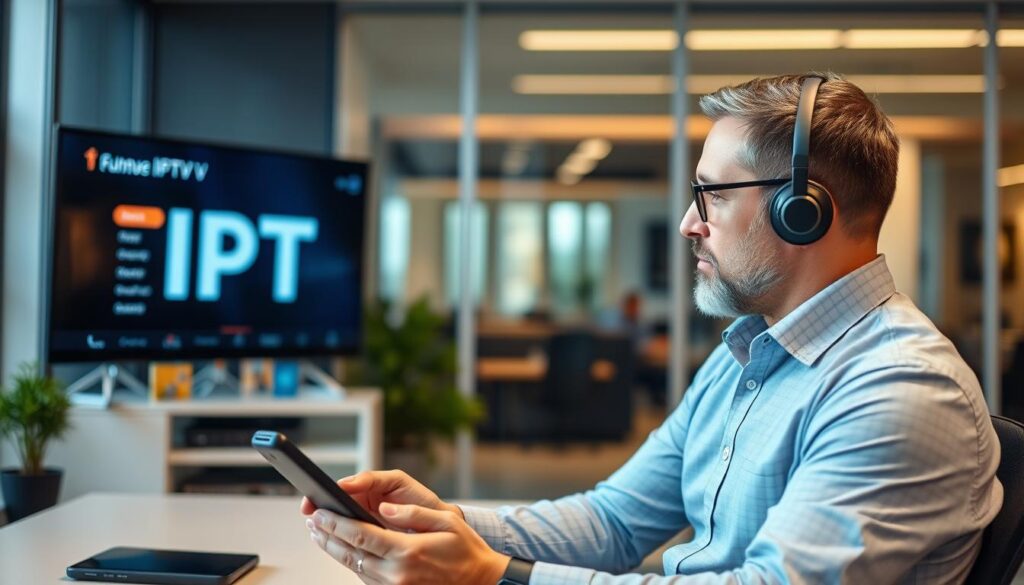
Understanding the essential equipment and requirements for IPTV is crucial for a smooth viewing experience. To enjoy IPTV services, you’ll need a stable internet connection and a compatible device.
Internet Connection Requirements
A reliable high-speed internet connection is the foundation of any IPTV setup. For HD streaming, a minimum speed of 10-15 Mbps is recommended, while 4K streaming requires 25+ Mbps to avoid buffering issues.
Compatible Devices
You’ll need compatible devices to access IPTV services. Options range from dedicated IPTV set-top boxes to smart TVs, streaming sticks, gaming consoles, computers, and mobile devices. You can check out this guide on how to set up IPTV on for more information on compatible devices.
IPTV Apps and Media Players
Most IPTV services require specific apps or media players to access their content. Popular options include IPTV Smarters Pro, Perfect Player, VLC Media Player, and Kodi with appropriate add-ons. These apps offer different features and compatibility options, ensuring a seamless viewing experience.
Your home network setup can significantly impact your IPTV experience. Wired ethernet connections typically provide more stable performance than Wi-Fi for high-definition streaming. By evaluating your existing equipment and determining what additional hardware or software you might need, you can get started with IPTV services.
Setting Up IPTV on Different Devices
With IPTV, you can watch your favorite content on various devices by following simple setup steps. The process may vary depending on the device you’re using, but overall, it’s a straightforward experience.
Smart TV and Streaming Device Setup
Setting up IPTV on smart TVs and streaming devices like Amazon Fire Stick, Roku, or Apple TV is relatively simple. You typically need to download the appropriate IPTV app from your device’s app store and enter your subscription credentials. For example, on Amazon Fire TV, you can search for your IPTV service in the Amazon Appstore and install it directly.

Computer and Mobile Setup
For computer setup, you can either install dedicated IPTV applications or access your service through a web browser. Both Windows and Mac offer multiple options for IPTV viewing. On mobile devices, iOS and Android users can download dedicated IPTV apps from their respective app stores. However, iOS users might face more restrictions due to Apple’s stricter app policies.
| Device | Setup Method | Notes |
|---|---|---|
| Smart TV | Download IPTV app | Check app store for availability |
| Computer | Install app or use browser | Multiple options available |
| Mobile | Download IPTV app | iOS users may face restrictions |
Gaming Console Setup
Gaming consoles like Xbox and PlayStation can also be used as IPTV players. You can install native IPTV apps or use media player applications to access IPTV streams. This turns your gaming system into a comprehensive entertainment center.
By following these setup guides, you can enjoy IPTV on your preferred devices. Remember to check for any specific requirements or restrictions for your device and IPTV service.
Legal Considerations and Choosing Legitimate IPTV Services
As you explore IPTV services, understanding the legal landscape is crucial for making informed decisions. The IPTV market includes both legitimate services that properly license their content and unauthorized operations that distribute pirated streams. It’s essential to distinguish between these to avoid potential risks.
Identifying Legitimate Providers
Legitimate IPTV providers typically have transparent business operations, professional websites, secure payment methods, and clear terms of service that outline their content licensing agreements. When researching potential IPTV providers, you should check reviews, verify business credentials, and confirm that they have proper licensing agreements for the content they offer. For more information on IPTV legality, you can visit this resource to learn more about the legal status of IPTV services.
Risks of Illegal IPTV Services
Using illegal IPTV services carries significant risks, including potential exposure to malware through unvetted apps, unreliable service quality, and possible legal consequences for accessing pirated content. Red flags that may indicate an illegitimate service include suspiciously low pricing, vague or missing business information, and requirements to use unofficial or sideloaded apps.
To ensure you’re using a legitimate IPTV service, look for providers that have secured the proper licenses and rights to distribute their content. This not only protects you from legal issues but also ensures a higher quality viewing experience.
Troubleshooting Common IPTV Issues
Common IPTV issues can be frustrating, but understanding how to troubleshoot them can significantly enhance your streaming quality. IPTV services, like any other streaming technology, can experience issues such as buffering or poor video quality, but these can often be fixed easily.
Fixing Buffering and Streaming Problems
Buffering and freezing are often caused by a slow or unstable internet connection. To resolve these issues, try restarting your router, closing all other apps or windows, reducing the number of devices using your network, or switching to a wired connection. You can also lower the streaming quality in your IPTV app settings to ease the load.
- Restart your device and router to refresh your connection.
- Close unnecessary apps to free up bandwidth.
- Consider using a wired connection for stability.
For more detailed guidance, you can visit this resource on troubleshooting IPTV issues.
Resolving App and Playback Issues
Apps sometimes misbehave after updates or if the device is low on memory. To fix these problems, clear the app’s cache, restart your device, or uninstall and reinstall the IPTV app. It’s also a good idea to update the app to ensure you’re using the latest version.
- Clear the app cache to remove temporary data that may be causing issues.
- Update your IPTV app to the latest version.
- Reinstall the app if problems persist.
By following these troubleshooting steps, you can significantly improve your IPTV service experience, ensuring smoother streaming and better video quality.
Optimizing Your IPTV Experience
Maximizing your IPTV experience requires attention to both your hardware and network settings. To ensure a seamless viewing experience, it’s crucial to optimize your setup.
Using VPNs with IPTV Services
Using a VPN with your IPTV service can provide several benefits, including enhanced privacy, protection from ISP throttling, and the ability to access geo-restricted content when traveling. A VPN masks your IP address, making it appear as though you’re accessing your IPTV service from your home country, thus allowing you to continue watching local news, your favorite channels, and on-demand content while away.
Not all VPNs work well with IPTV services. When choosing a VPN, look for options with streaming-optimized servers, strong encryption, and no-logs policies to ensure your streaming quality isn’t compromised.
Hardware and Network Optimization
Hardware optimization starts with choosing the right streaming device for your needs. Consider factors like processing power, memory, and codec support to ensure smooth playback of high-definition content.
Network optimization techniques include prioritizing your streaming device on your router, using wired connections where possible, and implementing Quality of Service (QoS) settings to minimize interference from other devices. For more detailed guidance on optimizing your IPTV setup, visit our guide on configuring your IPTV setup.
The Future of IPTV Technology
The future of IPTV is closely tied to its integration with other digital experiences. As IPTV services continue to evolve, we’re seeing a shift towards more personalized and interactive content options.
This evolution is driven by several key trends, including:
- The integration of artificial intelligence and machine learning to enhance IPTV services and recommend content based on viewer habits.
- The rise of niche channels catering to specific interests, moving away from traditional broadcasting’s one-size-fits-all approach.
- Advancements in technology, such as 5G networks and improved video compression, enhancing the viewing experience.
As IPTV continues to grow, it will become an integral part of the global entertainment landscape, offering diverse options for viewers worldwide. The future of television will be characterized by a vibrant ecosystem of thousands of niche channels, transforming the way we consume content in the digital world.
Conclusion
The world of television is changing, and IPTV services are at the forefront of this transformation, providing viewers with more control over their entertainment options. Throughout this guide, we’ve explored what IPTV services are, how they work, and the various benefits they offer to modern viewers seeking more flexibility in their viewing experience.
Whether you’re interested in live sports channels, on-demand movies and shows, or international content, there’s likely an IPTV service that can meet your specific needs. As you consider your options, remember to prioritize legitimate IPTV services that properly license their content, ensuring both legal compliance and a more reliable viewing experience.
With the continued advancement of internet infrastructure and streaming technology, IPTV services will likely play an increasingly important role in the future of television and home entertainment, making it an exciting time to explore new subscription options.