
The way we consume television content is undergoing a significant transformation, driven by streaming technology and the rise of cord-cutters.
Internet Protocol Television (IPTV) represents a revolutionary shift in content delivery, using internet protocols instead of traditional broadcasting methods. This allows for more flexibility and customization in viewing experiences.
As a comprehensive guide to IPTV, we’ll explore the ecosystem, from core technology to advanced features for modern streaming platforms. This will help you understand how to leverage IPTV solutions and create customized viewing experiences.
Key Takeaways
- Understand the core technology behind IPTV and its benefits.
- Learn how to implement advanced features in IPTV apps.
- Discover how IPTV solutions can enhance your streaming experience.
- Get insights into the technical foundations of IPTV development.
- Explore the business potential of IPTV technology in the growing streaming market.
Understanding IPTV Technology and Its Market Potential
IPTV, or Internet Protocol Television, represents a paradigm shift in content delivery, leveraging internet protocol networks to deliver television content. This technology is not just an alternative to traditional TV; it’s a more flexible, interactive, and personalized viewing experience.
What is IPTV and How Does It Work?
IPTV fundamentally differs from traditional broadcasting by delivering television content over IP networks rather than through conventional satellite or cable infrastructure. The technology works by breaking down video content into data packets that are transmitted over the internet and reassembled on the user’s device, enabling on-demand viewing and interactive features impossible with traditional TV.
The Growing Demand for IPTV Solutions
The global IPTV market is experiencing exponential growth, driven primarily by increasing internet speeds, widespread adoption of smart devices, and consumer demand for flexible viewing options. The cord-cutting movement has accelerated IPTV adoption, with millions of households abandoning traditional cable services in favor of internet-based alternatives that offer greater control and often lower costs.
IPTV services span multiple categories, including subscription-based platforms like Netflix, operator-managed solutions such as Xfinity Stream, playlist players like IPTV Pro, and customizable platforms. This versatility allows IPTV to serve niche content markets that traditional broadcasting often overlooks, creating opportunities for specialized IPTV services targeting specific demographics or interest groups.
Types of IPTV Services and Applications
IPTV technology supports a range of services, from simple playlist players to complex custom platforms. This diversity allows consumers to choose the type of IPTV service that best fits their viewing needs.
OTT Services and IPTV Operators
Over-the-top (OTT) services like Netflix and Disney+ offer licensed content through subscription models. These platforms are known for their sophisticated recommendation algorithms and user-friendly interfaces. On the other hand, IPTV operators are official apps from TV providers, offering the same services as traditional TVs but through an internet connection. You can explore more about these services at https://www.solidiptv.store/best-for-iptv/.
Playlist Players and Custom IPTV Platforms
Playlist players allow users to manually upload M3U playlists, offering basic playback functionality without built-in channels. In contrast, custom IPTV platforms offer the most flexibility, supporting plugins, APIs, and additional functions like Electronic Program Guides (EPG). These platforms are ideal for developers looking to create tailored viewing experiences.
Choosing the Right IPTV Model for Your Project
When selecting an IPTV model, consider factors like your technical expertise, content licensing capabilities, target audience, and monetization strategy. Each IPTV model presents different technical challenges and business options, from the heavily regulated OTT market to the more flexible custom platform space. By understanding these differences, you can choose the IPTV app or service that aligns with your project goals.
Essential Features for Successful IPTV Development
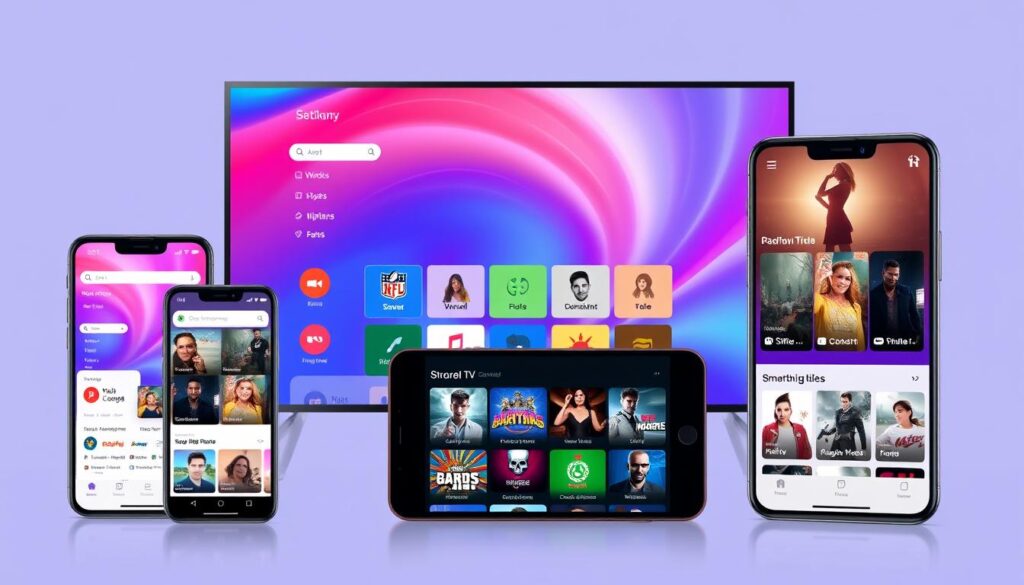
Developing a successful IPTV app requires careful consideration of several key features that enhance user experience and drive engagement. A well-rounded IPTV service must balance functionality with user-friendliness to attract and retain subscribers.
User Registration and Profile Management
A straightforward user registration process is crucial for IPTV apps, especially when accessed through TV-based interfaces where text input can be cumbersome. Consider implementing QR code linking to mobile registration or social login options to simplify the sign-up process.
Content Delivery and Playback Features
Content delivery networks (CDNs) are vital for ensuring reliable streaming performance. Advanced playback features such as adaptive bitrate streaming, time-shifting, and multi-language subtitle support can significantly enhance the user experience. For more information on setting up IPTV on various platforms, you can refer to our guide on setting up IPTV on Windows.
Search and Navigation Capabilities
Effective search and navigation capabilities are essential for helping users quickly find content within your IPTV app. Features like voice search integration, predictive text, category filtering, and personalized recommendations can greatly improve the user experience.
Multi-device Support and Compatibility
To cater to a wide range of users, your IPTV app should support multiple devices and platforms, including smartphones, tablets, smart TVs, and web browsers. Ensuring cross-platform compatibility and responsive design allows users to seamlessly transition between devices while maintaining their viewing state.
Subscription and Payment Integration
A secure and flexible subscription management system is critical for monetizing your IPTV service. This includes supporting multiple payment methods (credit cards, PayPal, mobile payments), offering flexible subscription models, and providing transparent billing with automated renewal notifications.
By incorporating these essential features, you can create a robust and user-friendly IPTV app that meets the evolving needs of your subscribers and stands out in a competitive market.
Technical Infrastructure for IPTV Development
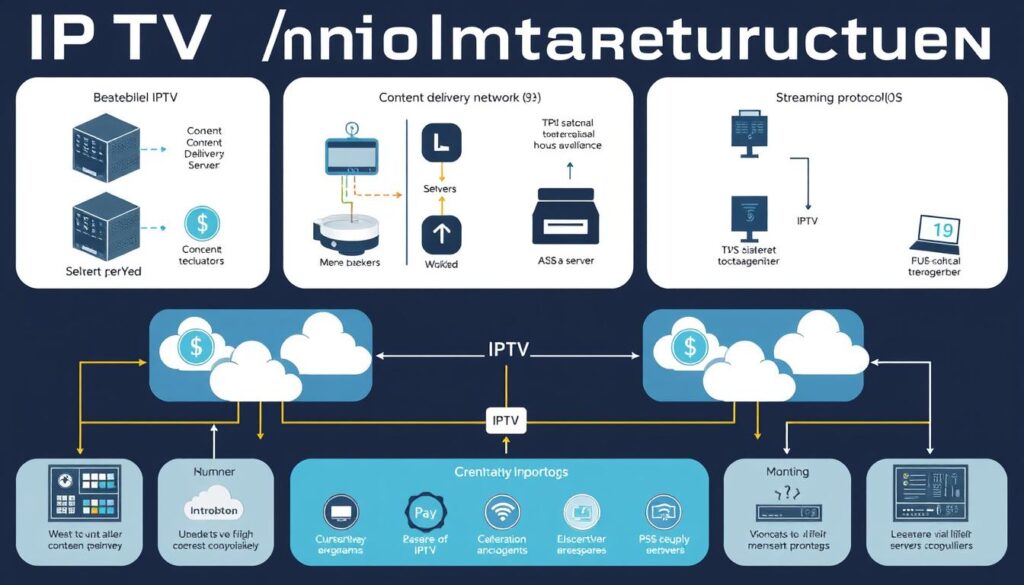
A reliable technical infrastructure is crucial for delivering high-quality IPTV services. This infrastructure encompasses several key components that work together to ensure seamless streaming and content delivery.
Streaming Protocols and Content Delivery Networks
Streaming protocols such as HLS (HTTP Live Streaming), RTMP (Real-Time Messaging Protocol), and MPEG-DASH (Dynamic Adaptive Streaming over HTTP) form the foundation of IPTV delivery. HLS is widely adopted due to its compatibility across devices, while RTMP excels in low-latency applications, and MPEG-DASH offers advanced adaptive streaming capabilities. A reliable Content Delivery Network (CDN) is essential for efficient content delivery, reducing latency and buffering by serving video from locations closest to each viewer.
Server Architecture and Backend Requirements
The server architecture for IPTV platforms must be designed for scalability and redundancy, employing load balancing, microservices architecture, and containerization to handle traffic spikes. Backend systems require robust database management for user data, content metadata, and viewing analytics, along with APIs that facilitate communication between frontend applications and content storage systems.
Video Encoding and Compression Standards
Video content needs to be encoded and compressed before it can be streamed efficiently. Common video formats for IPTV include H.264, H.265, and VP9. Video encoding and transcoding pipelines must process content into multiple quality levels, balancing visual quality against bandwidth requirements.
Technical infrastructure decisions directly impact both development costs and user experience. Cloud-based solutions like AWS Media Services or Google Cloud Media offer scalable alternatives to building proprietary encoding and delivery systems.
The IPTV Development Process Step-by-Step
The IPTV development process is complex, involving several key stages from research to deployment. To create a successful IPTV service, you need to understand and execute each phase effectively.
Research and System Analysis Phase
The research and system analysis phase is crucial for identifying market opportunities and understanding your target audience. This involves comprehensive market research to analyze competitor strengths and weaknesses, as well as potential differentiation points for your IPTV service. You should also define your database structure and create BPMN diagrams to visualize system workflows.
Design and Wireframing
During the design and wireframing stage, you create detailed user journey maps and information architecture diagrams. These help visualize the application flow before investing in visual design, ensuring intuitive navigation across different device interfaces. Your design concept should include fully-made screens and a visual identity that aligns with your brand.
Frontend and Backend Development
Frontend development for IPTV applications requires specialized knowledge of video player integration and adaptive layouts. You need to optimize for smooth performance on lower-powered devices. Backend development focuses on creating robust APIs, secure authentication systems, and scalable database architectures.
| Development Phase | Key Activities | Importance |
|---|---|---|
| Frontend Development | Video player integration, adaptive layouts | Ensures smooth performance across devices |
| Backend Development | API creation, authentication systems, database architecture | Critical for scalability and security |
Testing and Quality Assurance
Quality assurance for IPTV applications involves testing across multiple devices, network conditions, and user scenarios. You must pay particular attention to video playback reliability and authentication edge cases to ensure a seamless user experience.
Deployment and Maintenance
Deployment strategies should include phased rollouts and comprehensive monitoring systems. Maintenance plans must address regular content updates and technical infrastructure improvements. Documentation throughout the development process is crucial for future maintenance and feature additions.
By following this step-by-step guide, you can develop a robust and user-friendly IPTV service that meets the needs of your audience.
User Experience and Interface Design for IPTV Apps
The success of IPTV apps hinges on their ability to provide a seamless user experience across various devices and screen sizes. As the demand for IPTV services continues to grow, developers must prioritize creating intuitive interfaces that cater to diverse user needs.
Creating an Intuitive Navigation System
Designing an effective navigation system is crucial for IPTV apps. UI/UX designers define the user journey and navigation based on research, often using mind maps to visually organize features and illustrate user interactions. Navigation systems should prioritize content discovery while minimizing clicks required to start playback. Horizontally scrolling content rows have become the industry standard for efficient browsing. For remote control navigation, clear focus states, predictable tabbing orders, and shortcut buttons are essential.
Optimizing for Different Screen Sizes and Devices
Screen size optimization demands responsive design approaches that maintain visual hierarchy and content legibility across devices. According to research on IPTV user interfaces, typography choices significantly impact readability, with sans-serif fonts like Roboto proving most effective across different screen resolutions (source). As one expert notes, “the key to successful IPTV design is ensuring that the interface is adaptable to various viewing environments.” 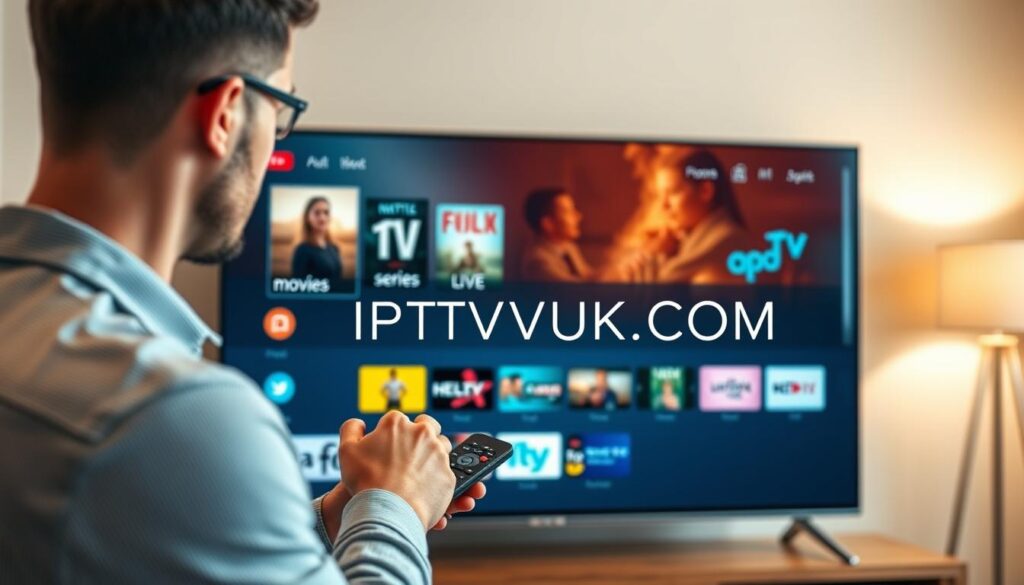
Color schemes should employ sufficient contrast ratios for text legibility while considering the viewing environment. User testing across multiple devices and input methods is essential for identifying navigation pain points, particularly for users with accessibility needs.
Content Licensing and Legal Considerations

As you build your IPTV service, understanding content licensing and legal considerations is crucial for long-term success. The internet is filled with illegal IPTV services that stream copyrighted content without permission, resulting in frequent shutdowns and significant legal penalties for their owners.
Understanding Copyright and Distribution Rights
To operate 100% legally, you cannot simply capture and restream television channels. Every piece of content is protected by copyright, and to distribute it legally, you must acquire the rights from the content owners. Content licensing forms the legal foundation of any legitimate IPTV service.
Understanding the difference between various rights categories is essential. These include broadcast rights, VOD rights, catch-up rights, and download rights, all of which are separate permissions that must be specifically acquired. For more information on IPTV market developments, you can refer to the Canadian government’s report on IPTV regulations.
Geo-restrictions and Content Protection
Content licenses are almost always geographically restricted. For instance, a license to stream a movie in North America does not grant you the right to stream it in Europe. To comply with these restrictions, IPTV platforms must implement reliable geo-blocking technology to prevent access from unauthorized territories.
Content protection measures, including Digital Rights Management (DRM), watermarking, and encryption, are not just technical considerations but legal requirements specified in most licensing agreements. For a comprehensive guide on IPTV services, you can check out IPTV Hub Review.
By understanding and adhering to these legal and content considerations, you can build a sustainable business that provides a high-quality service while minimizing issues related to copyright infringement and protection.
Monetization Strategies for IPTV Services
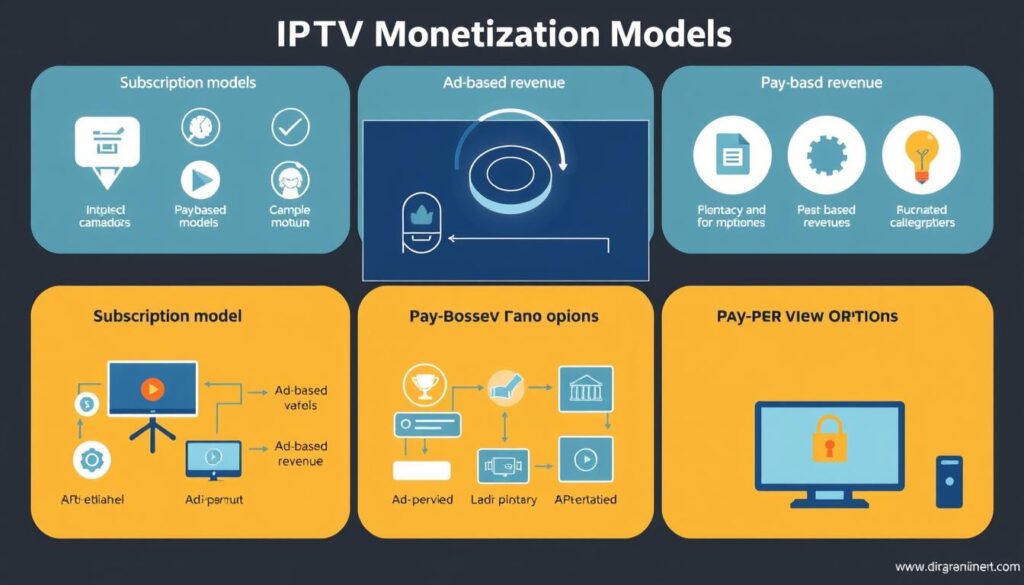
A well-planned monetization strategy is essential for IPTV service providers. The right approach can help you maximize revenue while maintaining a competitive edge in the market.
Subscription-Based Models (SVOD)
Subscription Video on Demand (SVOD) models generate predictable recurring revenue through monthly or annual fees. To minimize subscriber churn, it’s crucial to maintain a constantly refreshed content library and implement retention-focused features. Pricing strategies must balance perceived value against competitive offerings, with tiered options based on video quality, simultaneous streams, or content exclusivity.
Transactional Models (TVOD)
Transactional Video on Demand (TVOD) models work best for premium content like new movie releases or special events. This model allows users to pay only for specific content they want without ongoing commitments. TVOD is particularly effective for niche content or exclusive events that attract a dedicated audience willing to pay a premium.
Advertising-Based Models (AVOD)
Advertising-based Video on Demand (AVOD) requires significantly larger user bases to generate substantial revenue. Sophisticated ad targeting capabilities are becoming increasingly important to maximize CPM rates. AVOD can be an attractive option for users who are price-sensitive and willing to watch ads in exchange for free content.
Hybrid Monetization Approaches
Many IPTV services are adopting hybrid monetization approaches, combining ad-supported tiers with premium subscription options or core subscription services with additional transactional purchases for premium content. This flexibility allows services to cater to different user preferences and maximize revenue potential. According to recent market research, hybrid models are gaining popularity in the IPTV market, as seen in reports from industry research and marketsandmarkets.
Overcoming Common Challenges in IPTV Development
IPTV providers face numerous challenges, from streaming quality to security concerns. As the demand for IPTV services continues to grow, addressing these challenges becomes increasingly important.
Bandwidth and Streaming Quality Issues
One of the primary challenges is ensuring high-quality streaming despite bandwidth limitations. Implementing adaptive bitrate streaming can help adjust video quality based on available network conditions. Effective buffering strategies and pre-loading techniques can also significantly improve the viewing experience.
Security Concerns and Piracy Prevention
IPTV services are vulnerable to content piracy and unauthorized access. To combat this, robust DRM and security measures are essential. A multi-layered approach that includes technical measures like watermarking and fingerprinting, along with legal enforcement, can help prevent piracy.
Scaling Your IPTV Infrastructure
As your subscriber base grows, scaling your technical infrastructure becomes crucial. This involves optimizing load balancing, database performance, and content delivery to handle increased traffic. For more information on IPTV security, you can refer to resources like IPTV Security: Protecting High-Value Digital Contents.
| Challenge | Solution |
|---|---|
| Bandwidth Limitations | Adaptive Bitrate Streaming |
| Content Piracy | DRM, Watermarking, Fingerprinting |
| Infrastructure Scaling | Load Balancing, Database Optimization |

Conclusion: The Future of IPTV Development
The future of IPTV development will be shaped by technological innovations and shifting audience needs. As the market evolves, IPTV platforms will become more personalized with AI-driven content recommendations. Emerging technologies like augmented reality will enhance viewing experiences. For more insights on IPTV technology, visit research on IPTV.