
The way we consume entertainment is changing rapidly, and the choice between traditional television and modern streaming options is becoming increasingly important.
Cable IPTV combines the benefits of traditional TV with the flexibility of internet protocol technology, offering a unique viewing experience. On the other hand, streaming services have revolutionized media consumption, providing on-demand access to vast content libraries through internet-connected devices.
As you consider your entertainment options, understanding the strengths and limitations of both cable IPTV and streaming services is crucial for making an informed decision that suits your needs and budget.
Key Takeaways
- Understand the fundamental differences between cable IPTV and streaming services.
- Learn how cable IPTV combines traditional TV with internet protocol technology.
- Discover the benefits and limitations of streaming services.
- Make an informed decision based on your entertainment needs and budget.
- Optimize your viewing experience with the right choice.
Understanding the Evolution of Television Services
The rise of digital platforms has revolutionized the television industry, offering viewers more flexibility and customization options than ever before. This transformation is driven by advancements in technology and changing consumer preferences, marking a significant shift away from traditional broadcasting methods.
The Shift from Traditional Broadcasting to Digital Platforms
Traditionally, television broadcasting relied on cable and satellite connections to deliver content to viewers. However, with the advent of high-speed internet, streaming services have emerged as a popular alternative. These services utilize the internet to stream content, providing a more dynamic and customizable viewing experience. This shift is characterized by the ability to watch content on-demand, access to a wide array of channels and programs, and the flexibility to view on multiple devices.
The transition to digital platforms is also driven by consumer demand for more control over their viewing experience. Viewers are no longer satisfied with rigid broadcast schedules; instead, they seek the ability to watch what they want, when they want. This change in consumer behavior has prompted cable providers to adapt, with many now offering their own streaming options to remain competitive.
The Growing Trend of Cord-Cutting in America
The practice of cord-cutting—canceling traditional cable or satellite TV subscriptions in favor of internet-based alternatives—has seen a significant surge in America. This trend is driven by the desire for more flexible and affordable television services. Major cable providers have reported substantial losses in subscribers as consumers increasingly opt for streaming services and IPTV solutions that offer lower costs and greater flexibility.
Economic considerations play a crucial role in the decision to cut the cord. Households are analyzing the combined cost of internet service plus selected streaming subscriptions and comparing it to traditional cable packages. The COVID-19 pandemic has accelerated this trend, as stay-at-home orders prompted many Americans to reevaluate their entertainment options and discover the benefits of internet-based television services. As a result, the television landscape continues to evolve, with cord-cutting becoming an increasingly popular choice.
What is Cable IPTV?
As we move beyond traditional cable, Cable IPTV emerges as a compelling alternative for modern viewers. Cable IPTV, or Internet Protocol Television delivered through cable infrastructure, represents a significant evolution in how we consume television content.
Definition and Basic Technology
Cable IPTV utilizes internet protocol to deliver television content through a cable network. This technology enables a more interactive and personalized viewing experience. Unlike traditional cable, which relies on a one-way broadcasting system, Cable IPTV uses a two-way IP network.
The basic technology behind Cable IPTV involves transmitting TV channels and on-demand content over a high-speed internet connection. This allows for features like time-shifting and video-on-demand libraries, enhancing the overall viewing experience.
How Cable IPTV Differs from Traditional Cable
Several key differences distinguish Cable IPTV from traditional cable. Firstly, Cable IPTV offers greater interactivity and personalization through its two-way IP network. This means viewers can enjoy features like pausing and rewinding live TV, something not typically available with traditional cable.
Another significant difference lies in the infrastructure requirements. While traditional cable needs extensive physical coaxial networks, Cable IPTV can utilize existing internet infrastructure with specialized equipment. This shift changes how channels are delivered and accessed.
Furthermore, Cable IPTV allows for more flexible channels bundling and à la carte options, giving viewers more control over their content selection. In contrast, traditional cable typically organizes content in pre-defined tiers or packages.
For those looking to explore Cable IPTV options, especially in finding services with local channels, visiting this resource can be helpful.
What are Streaming Services?
The world of entertainment has been reshaped by streaming services, which now dominate the way we watch TV and movies. These platforms provide users with on-demand access to a vast library of content, including original series, movies, documentaries, and live TV.

Types of Streaming Platforms
Streaming platforms can be broadly categorized into several types based on their content offerings and business models. Some platforms specialize in on-demand content, while others focus on live TV streaming. There are also hybrid models that offer a combination of both on-demand and live TV options.
For instance, IPTV providers like Sling TV and YouTube TV offer highly customizable packages, allowing users to select specific channels or types of content. In contrast, traditional streaming services like Netflix and Disney+ focus on on-demand content, offering vast libraries of movies, TV shows, and original content.
Popular Streaming Services in the US Market
The US streaming market is dominated by several major players, each with its unique content offerings and pricing structures. Some of the most popular streaming services include:
- Netflix: With approximately 74 million US subscribers, Netflix remains the market leader, offering a vast library of original content and licensed movies/shows.
- Disney+: Disney+ has rapidly gained popularity, attracting over 40 million US subscribers with its family-friendly content and exclusive franchise releases.
- Amazon Prime Video: Amazon Prime Video benefits from its integration with Amazon Prime membership, offering a substantial content library, including award-winning original series and movies.
- HBO Max (now Max): HBO Max offers premium content from HBO, Warner Bros., and DC Universe, positioning itself as a premium service with high-quality programming options.
- Hulu: Hulu provides a unique hybrid model, offering both on-demand content and live TV options, with next-day access to current TV shows from major networks.
- YouTube TV and Sling TV: These services lead the live TV streaming segment, providing cable-like experiences with local channels, sports networks, and cloud DVR capabilities.
Technology Behind the Scenes
Behind the scenes of your favorite cable IPTV and streaming services lies a complex web of technologies working to bring content to your screen. At the heart of this technology is the method of streaming over internet protocols, which enables the efficient and seamless delivery of multimedia content.
Cable IPTV: Internet Protocol Television Explained
Cable IPTV relies on internet protocol television technology to deliver content. This involves using protocols like HLS (HTTP Live Streaming) and DASH (Dynamic Adaptive Streaming over HTTP), which allow the service to adapt in real-time to the viewer’s internet connection, minimizing buffering and ensuring a smooth viewing experience.
By utilizing these protocols, cable IPTV providers can offer a stable and high-quality viewing experience. The use of managed networks ensures that the content is delivered efficiently, making it a reliable choice for viewers.
Streaming Services: Content Delivery Networks
Streaming services, on the other hand, rely heavily on sophisticated Content Delivery Networks (CDNs) to distribute their content. CDNs are distributed systems of servers positioned around the world to minimize the physical distance between content and viewers, reducing latency and improving playback quality.
When you press play on a streaming service, your request is automatically routed to the nearest CDN server containing your desired content. These networks employ adaptive bitrate streaming technologies that continuously monitor your internet connection and adjust video quality accordingly.
Major streaming providers operate their own proprietary CDNs, while smaller services contract with third-party CDN providers. The use of CDNs and adaptive streaming technologies enables streaming services to deliver consistent performance across millions of simultaneous viewers.
Content Availability and Selection
The content landscape varies significantly between cable IPTV and streaming services, impacting user experience and satisfaction. When choosing between these options, understanding the differences in content availability is crucial.
Channel Selection in Cable IPTV
Cable IPTV services provide a traditional channel-based approach to content delivery, offering a range of channels that cater to different viewer preferences. This includes live TV, sports, news, and entertainment channels. The channel selection is often determined by the service provider’s package offerings, which can include a mix of local, national, and international channels.
Key benefits of cable IPTV channel selection include access to live events and the ability to watch content as it’s broadcast. However, the channel lineup can be limited by the provider’s agreements with content distributors.
Content Libraries in Streaming Services
Streaming services, on the other hand, have revolutionized content organization by moving away from traditional channel-based models toward vast, on-demand libraries. These libraries offer a wide range of content, including TV shows, movies, documentaries, and original content produced exclusively for the platform.
Streaming services like Netflix and Amazon Prime Video invest heavily in creating extensive libraries of high-definition content, with some services focusing on quantity and others on quality or specificity. For instance, Netflix offers thousands of titles, while HBO Max emphasizes premium programming.
- Streaming services provide on-demand access to a vast array of content, allowing viewers to watch at their convenience.
- The use of sophisticated recommendation algorithms helps users discover new shows and movies based on their viewing habits.
- However, the fragmentation of streaming rights can lead to exclusive content deals, potentially requiring multiple subscriptions to access all desired content.
User Experience and Interface
As we dive into the world of Cable IPTV and streaming services, the user interface emerges as a key differentiator. The experience you have with either service can significantly impact your viewing satisfaction.
Navigating Cable IPTV Systems
Cable IPTV systems have evolved to provide more user-friendly interfaces. You can now search for content quickly and receive personalized recommendations based on your viewing history. For instance, setting up IPTV on various devices has become more streamlined, as seen in guides like the one for setting up IPTV on Windows.
| Feature | Cable IPTV | Streaming Services |
|---|---|---|
| Search Functionality | Basic search capabilities | Advanced search with predictive text and voice search |
| Content Organization | Traditional channel lineup | Tile-based layouts with curated collections |
Streaming Platforms’ User Interfaces
Streaming platforms have revolutionized the television interface, moving away from time-based program guides toward content-focused designs. Most streaming services employ tile-based layouts that feature artwork for shows and movies, organized into curated collections and personalized recommendations.
- Robust search functionality with predictive text and voice search options
- Cross-device consistency for a seamless viewing experience
- User profiles for personalized watchlists and viewing histories
The interface of streaming services is designed to be intuitive, making it easier for you to find and enjoy your favorite content. With features like user profiles and sophisticated recommendation algorithms, streaming services offer a tailored viewing experience.

Picture Quality and Streaming Performance
Picture quality and streaming performance are key determinants of the overall viewing experience, whether you’re using Cable IPTV or streaming services. A high-quality stream can make your favorite shows and movies more enjoyable, while a poor-quality stream can lead to frustration.
Resolution Options: HD, 4K, and Beyond
Both Cable IPTV and streaming services offer various resolution options, including HD, 4K, and in some cases, even higher resolutions. 4K resolution, in particular, provides a much more detailed and immersive viewing experience compared to HD. However, to take full advantage of these higher resolutions, you’ll need a robust internet connection. For instance, 4K content typically requires a consistent internet speed of 25-35 Mbps, while HD content needs 5-10 Mbps.
Streaming services often provide options to adjust the video quality based on your internet connection, ensuring a smooth viewing experience. This adaptability is crucial for maintaining a smooth viewing experience even when your internet bandwidth is limited.
Factors Affecting Streaming Quality
Several factors can impact streaming quality, making it essential to understand these elements to optimize your viewing experience. Some of the key factors include:
- Internet Bandwidth: The primary factor affecting streaming quality. Higher bandwidth ensures smoother streaming at higher resolutions.
- Network Congestion: Peak viewing hours can lead to network congestion, affecting streaming performance even with adequate bandwidth.
- Home Network Configuration: Wired Ethernet connections generally provide more stable performance than Wi-Fi, especially for high-resolution content.
- Device Processing Power: Older devices may struggle to decode high-resolution content smoothly, resulting in stuttering or crashes.
- Content Delivery Network (CDN) Efficiency: Larger streaming providers invest in distributed server infrastructure to reduce latency and buffering.
- Adaptive Bitrate Technology: Automatically adjusts video quality based on available bandwidth, helping maintain a smooth viewing experience.
By understanding these factors and optimizing your setup, you can significantly enhance your streaming quality, ensuring a more enjoyable viewing experience.
Device Compatibility and Accessibility
Device compatibility and accessibility have become key considerations when deciding between Cable IPTV and streaming services. As we explore this aspect, it’s essential to understand how each technology performs across various devices.
Cable IPTV Compatible Devices
Cable IPTV services typically require specific equipment to function, such as set-top boxes or dedicated IPTV devices. You can access Cable IPTV through specialized IPTV boxes designed to connect to your TV. Some providers may offer apps for smart TVs or mobile devices, but the primary viewing experience is usually centered around a dedicated device connected to your television.
IPTV services are advancing in terms of high-quality content, with many providers offering 4K resolution and HDR (High Dynamic Range) content. Additionally, IPTV platforms utilize adaptive streaming, adjusting picture quality based on your internet connection speed to ensure a smooth viewing experience.
How Streaming Services Work Across Multiple Devices
Streaming services are designed with multi-device accessibility as a core feature. They typically support a wide range of hardware, including:
- Smart TVs
- Gaming consoles
- Streaming sticks
- Computers
- Tablets
- Smartphones
Most major streaming platforms maintain consistent user interfaces across devices, optimizing for each screen size and input method. This allows for familiar navigation whether you’re using a remote control, touchscreen, or game controller. Furthermore, synchronization between devices is a standard feature, enabling seamless transitions between viewing sessions on different devices.
Streaming services also offer additional features such as multiple simultaneous streams from a single account and download functionality for offline viewing, enhancing access to content across various devices.
Cost Comparison: Cable IPTV vs. Streaming Services
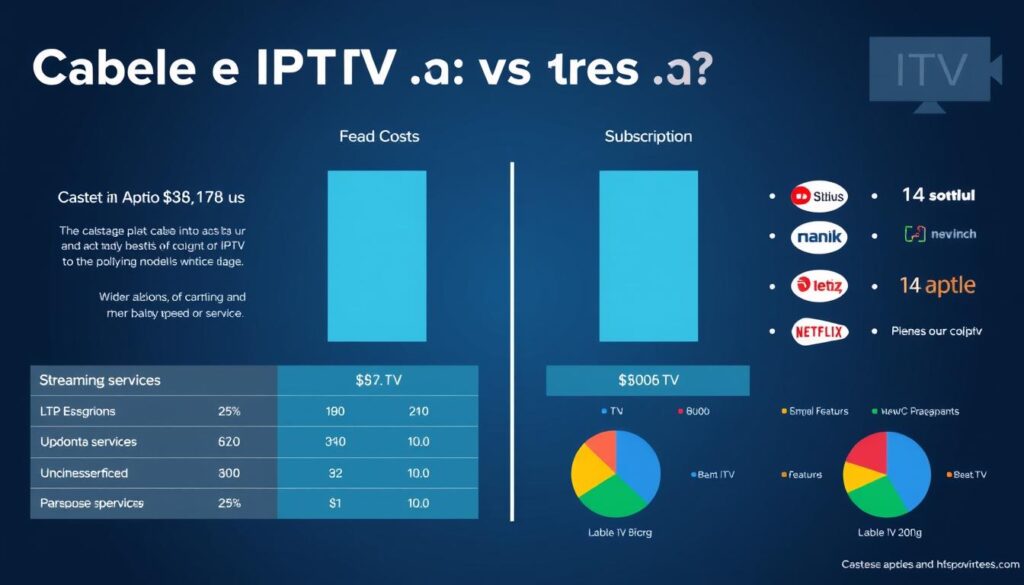
The total cost of ownership for cable IPTV versus streaming services is a critical comparison for consumers. When evaluating these services, it’s essential to consider not just the base subscription cost but also the additional fees and the cost of the required internet connection.
Subscription Models and Pricing Structures
Cable IPTV services typically offer tiered pricing models, with various packages that include different channel lineups. These can range from basic entertainment packages to more comprehensive premium offerings that include sports and movie channels. The cost for these services can vary significantly based on the provider and the specific channels included.
Streaming services, on the other hand, often adopt a more à la carte approach, with many offering a basic subscription model and then additional premium tiers or add-ons for extra content or features like 4K resolution. This flexibility allows consumers to tailor their viewing experience to their preferences and budget.
Hidden Costs and Additional Fees
Beyond the advertised monthly subscription fees, both cable IPTV and streaming services can come with additional costs. For cable IPTV, these may include equipment rental fees for set-top boxes, DVR service fees, and regional sports network fees. Installation and activation fees can also apply, although these are often waived during promotional periods.
Streaming services generally have fewer hidden costs, but they may charge extra for enhanced features such as increased simultaneous streams or expanded cloud DVR storage. Moreover, the cost of a robust internet connection capable of supporting high-quality streaming is a significant consideration for both types of services.
When calculating the total cost, it’s also important to consider the cumulative effect of subscribing to multiple streaming services to match the content variety offered by a single cable IPTV package. This “subscription fatigue” can lead to a situation where the total cost of streaming services approaches or even exceeds that of cable IPTV.
Internet Requirements for Optimal Performance
To enjoy uninterrupted entertainment, understanding the internet requirements for Cable IPTV and streaming services is essential. A high-speed broadband connection is vital for a smooth viewing experience.
Bandwidth Needs for Cable IPTV
Cable IPTV services typically operate within a managed network environment, which means the internet service provider controls the quality of the connection. However, the bandwidth requirements can vary based on the number of streams and the quality of the content being delivered. For instance, a household watching multiple HD streams simultaneously will require a higher bandwidth to prevent buffering.
- Standard definition content requires less bandwidth, typically around 3-5 Mbps.
- HD content needs 5-10 Mbps per stream.
- For multiple streams, aggregate bandwidth requirements should be calculated to ensure a smooth viewing experience.
Internet Speed Requirements for Streaming Services
Streaming services, on the other hand, rely on the public internet, which can be more unpredictable. According to bandwidth requirements for streaming, streaming services recommend specific internet speeds based on content resolution. For example, 4K Ultra HD streaming demands 25-35 Mbps of consistent bandwidth.
- Latency and jitter can significantly affect streaming performance, regardless of the raw speed.
- Internet service provider policies, such as data caps and throttling, can also impact streaming quality.
- Wi-Fi network configuration plays a crucial role in actual streaming performance, with factors like router placement and interference affecting available bandwidth.
For a seamless viewing experience, it’s crucial to assess your household’s total bandwidth needs and choose an internet plan that can accommodate them. You can find more detailed information on optimizing your internet for streaming on our blog post about bandwidth requirements.
Reliability and Service Stability
Service reliability is a critical consideration for consumers choosing between cable IPTV and streaming platforms. The stability of a television service directly impacts the viewing experience, making it essential to evaluate the reliability factors of both options.
Reliability Factors in Cable IPTV
Cable IPTV services generally offer more stable connections compared to streaming platforms. This stability is partly due to the dedicated infrastructure used by cable IPTV providers. Reliability is enhanced through redundant systems and robust network management, minimizing the likelihood of service interruptions. Additionally, cable IPTV’s reliance on a managed network means that the service provider has more control over the quality of the connection, ensuring a consistent viewing experience.
One of the significant advantages of IPTV is its vast library of on-demand content, which can be accessed without the buffering issues common in streaming services. As noted by industry experts, “IPTV platforms allow you to explore international programming and tailor your viewing experience based on specific interests.”
Common Issues with Streaming Platforms
Streaming services, while convenient and flexible, are prone to several issues that can affect their reliability. Buffering remains the most common complaint among users, typically resulting from insufficient bandwidth, network congestion, or server-side limitations during high-demand periods. For instance, popular streaming services like Disney+ and HBO Max have experienced service outages during major events, highlighting the challenges faced by these platforms.
- Authentication problems frequently frustrate streaming users, with “too many devices” errors and account verification issues creating access barriers.
- Audio-video synchronization issues occur more frequently on streaming platforms than on cable IPTV, particularly when adaptive bitrate technology makes mid-stream quality adjustments.
- App performance varies significantly across devices, with older smart TVs or streaming devices sometimes experiencing slow navigation or crashes.
- Internet service provider throttling can affect streaming performance, especially during extended viewing sessions or when monthly data caps are approached.
For those seeking a reliable streaming experience, it’s essential to choose a reputable service. You can explore options and find the best IPTV service by visiting this guide, which provides valuable insights into selecting a reliable IPTV provider.
On-Demand Content and Live Programming
In today’s digital age, the options for television viewing have expanded, with Cable IPTV and streaming services providing diverse entertainment choices. You can now enjoy your favorite shows and movies at your convenience, thanks to the advancements in on-demand content.
Live TV Options in Both Services
Both Cable IPTV and streaming services offer live TV options, catering to different viewer preferences. Streaming services have introduced live TV streaming, allowing you to watch your favorite channels in real-time. This feature is particularly appealing to sports enthusiasts and news junkies who want to stay updated at any time.
Cable IPTV also provides live TV, often with a more traditional broadcast experience. You can access a range of channels, including local stations and premium networks, depending on your subscription package.

On-Demand Libraries and Availability
The on-demand content available on both platforms varies significantly. Streaming services boast extensive libraries with thousands of titles, including TV shows and movies. Platforms like Netflix and Amazon Prime Video have revolutionized the way we consume entertainment, offering a vast selection of on-demand content.
Cable IPTV providers have also expanded their on-demand offerings, though the content may be more limited compared to streaming giants. The availability of on-demand content is a crucial factor for many viewers, making it essential to consider when choosing between Cable IPTV and streaming services.
When evaluating these services, consider how important on-demand content is to your viewing experience. If having access to a wide range of content at your convenience is a priority, you may lean towards streaming services with their comprehensive on-demand on-demand content libraries.
Customization and Personalization Features
Personalization features are revolutionizing how we consume television content. Both Cable IPTV and streaming services have evolved to offer users a more tailored viewing experience, catering to individual preferences and viewing habits.
Tailoring Your Cable IPTV Experience
Cable IPTV providers are now offering more customization options to enhance user experience. You can often create a personalized channel lineup, selecting from various packages to suit your viewing preferences. For more information on customizing your Cable IPTV experience, you can visit this resource. Some providers also allow you to create multiple user profiles within a single account, enabling different household members to maintain their own watchlists and preferences.
- Customize your channel lineup to include your favorite channels.
- Create multiple user profiles for different household members.
- Some providers offer on-demand content tailored to your viewing history.
Personalization Options in Streaming Services
Streaming services have made personalization a cornerstone of their user experience. Sophisticated algorithms analyze your viewing habits to create tailored recommendations, helping you discover relevant content within vast libraries. Most major streaming platforms support multiple user profiles per account, allowing each household member to maintain separate watchlists, viewing histories, and preferences.
- Advanced algorithms provide personalized content recommendations.
- Multiple user profiles allow for individualized experiences.
- Customizable playback settings, such as autoplay and subtitle options, enhance viewing comfort.
- Personalized notifications alert you to new content matching your interests.
By leveraging these personalization features, you can save time while enjoying a more tailored entertainment experience. Whether you prefer Cable IPTV or streaming services, there’s never been a better time to enjoy your favorite content your way.
Legal Considerations and Service Legitimacy
Ensuring you’re using a legitimate television service is not just about avoiding legal trouble; it’s also about supporting content creators. As the television landscape continues to evolve, understanding the legal implications of your chosen service is crucial.

Understanding Legal IPTV Services
Legal IPTV services operate within the bounds of copyright law, obtaining necessary licenses to broadcast content. When selecting an IPTV service, it’s essential to verify its legitimacy. Some key indicators of a legal IPTV service include transparent business information, clear privacy policies, and reasonable pricing. You can find more information on legitimate IPTV services by visiting this resource.
- Transparent business information and clear privacy policies are hallmarks of legitimate services.
- Reasonable pricing that aligns with industry standards.
- Licensing agreements with content providers.
Copyright Issues in Streaming
The streaming landscape is marred by unauthorized services that provide access to copyrighted content without proper licensing. These services often charge lower fees but expose users to potential legal risks. Copyright holders are increasingly aggressive in pursuing legal action against both providers and users of unauthorized streaming services. Penalties can include significant fines and, in extreme cases, criminal charges.
“The threat of copyright infringement is real, and it’s not just the service providers who are at risk; users can also face legal consequences.”
To avoid these risks, it’s crucial to identify red flags for potentially illegal streaming services, such as unusually low prices, access to premium content without geographic restrictions, and a lack of transparent business information. Legitimate content providers invest in anti-piracy technologies and cooperate with law enforcement to protect their intellectual property.
How to Choose Between Cable IPTV and Streaming Services
When it comes to selecting between cable IPTV and streaming services, several factors come into play that can significantly impact your viewing experience. The decision ultimately depends on your specific needs, viewing habits, and technical infrastructure.
Assessing Your Viewing Habits and Preferences
To make an informed decision, start by assessing your viewing habits. Consider what type of content you watch most frequently. If you prioritize live TV, sports, and local channels, cable IPTV might be the better choice. On the other hand, if you’re more interested in on-demand content, such as original series and movies, streaming services could be more suitable.
It’s also essential to consider your household’s technology comfort level. If you’re comfortable with setting up and troubleshooting devices and apps, streaming services might offer the flexibility you need. However, if you prefer a more straightforward, unified experience, cable IPTV could be preferable.
Decision Factors: Budget, Content, and Technical Requirements
Several key factors will influence your decision between cable IPTV and streaming services: budget, content availability, and technical requirements. Understanding your internet connection’s capabilities is also crucial.
| Factor | Cable IPTV | Streaming Services |
|---|---|---|
| Budget | Often requires equipment rental fees and installation charges | Typically no equipment rental fees; flexible pricing plans |
| Content | Comprehensive live TV options, including local channels and sports | Strong on-demand content libraries, including original series and movies |
| Technical Requirements | Generally less dependent on internet speed; more stable connection | Requires a stable, high-speed internet connection; data caps may apply |
When evaluating your budget, consider not just the base subscription costs but also any additional fees, such as equipment rental and installation charges. For content, think about what’s most important to you—live TV, sports, original series, or movies. Finally, assess your technical requirements by evaluating your internet connection’s speed, stability, and data caps to ensure it can support your chosen service.
By carefully considering these factors and how they align with your viewing habits and preferences, you can make an informed decision that best suits your entertainment needs.
Conclusion: Making the Right Choice for Your Entertainment Needs
In today’s entertainment market, understanding the differences between cable IPTV and streaming services is crucial for making an informed choice. Determining whether IPTV or Cable TV better suits your needs depends on a variety of factors, such as your viewing preferences, internet connection quality, and budget considerations.
If your priority is on-demand content and you enjoy interactive features with a reliable high-speed internet connection, then IPTV may be the preferable choice. On the other hand, if you prioritize live television, particularly local channels and breaking news, cable IPTV might be more suitable.
The decision between cable IPTV and streaming services ultimately depends on your specific entertainment priorities. Neither option is universally superior for all viewers. Cable IPTV excels for viewers who value live television and a traditional viewing experience, while streaming services offer unmatched flexibility and customization for on-demand content.
Many households are finding that a hybrid approach provides the best viewing experience. This involves combining a high-speed internet connection with select streaming subscriptions for on-demand content while maintaining a basic cable package for live programming. The key is to assess your viewing habits, content preferences, technical capabilities, and budget constraints to create a satisfying entertainment setup.
Taking the time to evaluate these factors will lead to a more personalized viewing experience. As the entertainment landscape continues to evolve, both cable IPTV providers and streaming services are enhancing their offerings. For instance, cable IPTV providers are improving their on-demand libraries and app-based access, while streaming services are expanding their live programming options. For more insights on making an informed choice, you can visit Jaze Networks.
Whichever option you choose, the good news is that viewers today have more control and choice in their entertainment experiences than ever before. By considering your specific needs and taking the time to understand the available options, you can customize your entertainment setup to match your unique preferences and lifestyle.