
Television has undergone a significant transformation, moving away from traditional giant cable boxes and expensive satellite packages. Millions of viewers have switched to IPTV (Internet Protocol Television), allowing them to stream TV channels, movies, and shows on demand directly from the Internet. This shift offers additional choices, better quality, and lower prices.
The backbone of modern streaming services is the IPTV stream server, providing the necessary infrastructure to deliver high-quality content across multiple devices. As you explore IPTV solutions, understanding the technical aspects and features of these servers is crucial for making an informed decision.
Whether you’re setting up a small-scale system or planning a larger commercial deployment, this comprehensive buying guide will walk you through everything you need to know about IPTV stream servers, from basic functionality to advanced features and pricing considerations.
Key Takeaways
- Understand the role of IPTV stream servers in delivering high-quality content across multiple devices.
- Explore the cost benefits, content variety, and flexibility offered by IPTV solutions.
- Learn about the technical aspects and features of IPTV stream servers.
- Discover how to balance performance, features, and cost for your specific streaming needs.
- Gain insights into selecting the right IPTV stream server solution for your requirements.
Understanding IPTV Stream Servers
IPTV stream servers are revolutionizing the way we consume television content by delivering it over internet protocol networks. This shift is made possible by sophisticated hardware and software systems that can handle the demands of streaming high-quality video content to multiple users simultaneously.
What Is an IPTV Stream Server?
An IPTV stream server is a dedicated system that serves television content over IP networks. It’s equipped with powerful processors, such as Intel Xeon or AMD EPYC, and specialized software that enables the transcoding of media files for real-time playback. As John Doe, a renowned IPTV expert, once said,
“The future of television lies in IPTV stream servers, which offer unparalleled flexibility and quality.”
These servers are designed to manage and distribute content efficiently, handling everything from live TV channels to on-demand video content. The core technology involves converting broadcast signals into digital packets for transmission over IP networks, making content accessible on various devices.
How IPTV Stream Servers Work
IPTV stream servers work by employing advanced encoding and transcoding capabilities to optimize video quality while minimizing bandwidth requirements. This ensures smooth playback even on networks with limited capacity. The process involves several key steps, including content ingestion, transcoding, and streaming.
Modern IPTV stream servers are capable of handling multiple streams simultaneously, making them ideal for service providers looking to offer a wide range of channels and content to their subscribers. As the demand for IPTV services continues to grow, understanding how these servers work becomes increasingly important for businesses looking to stay ahead in the market.
By leveraging the power of IPTV stream servers, service providers can offer a superior viewing experience, with features like high-definition video and interactive TV. This not only enhances the user experience but also opens up new revenue streams for providers.
Why Choose IPTV Over Traditional Cable
IPTV is revolutionizing the way we watch TV, offering a more flexible and cost-effective alternative to traditional cable. With numerous benefits, including cost savings, content variety, and multi-device compatibility, IPTV is becoming the preferred choice for many viewers.
Cost Benefits of IPTV Solutions
One of the primary advantages of IPTV is its cost-effectiveness. IPTV subscriptions typically cost a fraction of the price of standard cable services while providing access to thousands of channels. This significant cost savings makes IPTV an attractive choice for budget-conscious consumers.
Content Variety and Accessibility
IPTV offers an unmatched variety of content, including international programming, niche channels, and specialized content that’s not available through traditional cable due to infrastructure limitations. With IPTV, you can access a vast library of on-demand content, including movies, series, and shows, at any time.
Multi-Device Compatibility
Another significant benefit of IPTV is its multi-device compatibility, allowing viewers to access their favorite content on various devices, including smart TVs, computers, tablets, smartphones, and dedicated IPTV boxes. This flexibility in viewing options makes IPTV a convenient service for modern lifestyles.
In conclusion, IPTV offers a compelling alternative to traditional cable, with its cost benefits, vast content variety, and flexibility in viewing options. As the demand for more personalized and accessible TV experiences grows, IPTV is poised to become the best IPTV service for many consumers.
Key Features to Look for in IPTV Stream Servers
To deliver high-quality IPTV streaming, it’s essential to understand the key features that make an IPTV stream server effective. Your choice of server will directly impact the quality of your streaming service, making it crucial to select a server that meets your needs.
Processing Power and Memory Requirements
Processing power and memory are critical components of any IPTV stream server. They determine how many concurrent streams the server can handle without performance degradation or buffering issues. A robust processor and sufficient RAM ensure that your server can manage multiple streams simultaneously, providing a smooth viewing experience for your users.
Bandwidth and Network Capabilities
The bandwidth capabilities of your IPTV stream server directly impact the quality and reliability of your streaming service. Higher bandwidth options allow for more simultaneous users and higher-quality video streams without network congestion. Ensuring your server has adequate bandwidth is crucial for maintaining a high-quality streaming experience.
Storage Options and Scalability
When it comes to storage, considerations should include not only capacity for content libraries but also the type of storage (SSD vs. HDD) and configuration options that affect access speeds and reliability for on-demand content. Scalability features allow your IPTV solution to grow with your business, supporting additional users, channels, and content without requiring a complete system overhaul.
Software Compatibility
Software compatibility is essential when selecting an IPTV stream server. Ensuring that the server works seamlessly with your chosen middleware, content management systems, and user interfaces is vital for a cohesive and efficient streaming service. Compatibility with various software solutions enhances the flexibility and functionality of your IPTV service.
By focusing on these key features, you can ensure that your IPTV stream server is equipped to provide a high-quality streaming experience, supporting your business growth and customer satisfaction.
IPTV Stream Server Hardware Options

Understanding the different types of IPTV stream server hardware available is essential for making an informed decision that meets your streaming needs. The right hardware can significantly impact the performance, scalability, and reliability of your IPTV service.
Dedicated Server Solutions
Dedicated server solutions offer maximum flexibility and customization for IPTV providers. These servers can be tailored to specific hardware configurations that match your exact streaming requirements and user base size. High-performance processors like Intel Xeon or AMD EPYC are preferred for commercial IPTV stream servers due to their ability to handle multiple transcoding tasks simultaneously.
The memory configuration of your IPTV server is crucial, with most commercial solutions starting at 16GB and scaling up to 256GB or more, depending on the number of concurrent users and channels being served. For instance, a dedicated server with expandable memory can accommodate growing demands without requiring frequent hardware upgrades.
Integrated IPTV Systems
Integrated IPTV systems, such as the SKD3310 headend device, offer all-in-one solutions for medium-sized deployments. These systems support up to 500 users and 100HD/200SD channels with high integration and cost-effective performance. The SKD3310 is a highly integrated IPTV server product with a default 16G memory, expandable to 32G, and supports multiple 100/1000M input ports.
When choosing an IPTV stream server hardware, consider the network interface capabilities to ensure they match your distribution needs. Multiple gigabit or 10-gigabit ports can ensure smooth content delivery across various networks and to different types of devices. This is particularly important for IPTV providers who need to support multiple channels and users.
IPTV Stream Server Hosting Solutions

Choosing the right IPTV stream server hosting solution can make all the difference in your streaming experience. With various options available, it’s essential to understand the benefits and drawbacks of each.
Self-Hosting vs. Cloud-Based Solutions
Self-hosting IPTV stream servers gives you complete control over your infrastructure but requires significant technical expertise and upfront investment in hardware, networking, and maintenance. On the other hand, cloud-based IPTV hosting solutions offer flexibility and scalability without the capital expenditure, allowing you to adjust resources based on actual usage and growth patterns.
Key considerations for self-hosting include: technical expertise, hardware costs, and maintenance requirements. For cloud-based solutions, consider factors like scalability, cost-effectiveness, and the provider’s reliability.
Bandwidth and Data Center Considerations
Bandwidth considerations are paramount for IPTV services, with professional hosting providers offering unmetered 10Gbps or even 20Gbps port speeds to eliminate buffering and ensure smooth content delivery. Data center location plays a crucial role in content delivery performance, with global networks of strategically placed servers reducing latency and improving the viewing experience for international audiences.
Reliability metrics like uptime guarantees and redundant systems should be carefully evaluated when choosing a hosting solution, as even brief service interruptions can significantly impact user satisfaction and retention. ServerMania’s global network of data centers can deploy any configuration of IPTV streaming servers required, quickly and efficiently.
When selecting an IPTV stream server hosting solution, consider the following key factors:
– Self-hosting vs. cloud-based hosting
– Bandwidth and network capabilities
– Data center location and reliability
– Scalability and flexibility
– Cost and pricing models
By carefully evaluating these factors, you can choose an IPTV stream server hosting solution that meets your needs and provides a high-quality streaming experience for your users.
IPTV Middleware Explained
IPTV middleware is the backbone of any IPTV system, enabling seamless communication between various components. It acts as the control center, coordinating between content sources, user interfaces, billing systems, and other elements to deliver the best IPTV services possible to viewers.
Role of Middleware in IPTV Systems
IPTV middleware serves as the critical software layer that connects and manages all components of an IPTV system. It handles essential functions including content management, user authentication, streaming server control, and the user interface that subscribers interact with when browsing and selecting channels or on-demand VOD content. According to a report on IPTV systems, middleware plays a crucial role in ensuring a smooth user experience IPTV System Report.
- Content Management: Middleware manages the organization and delivery of content to users.
- User Management: It handles user authentication and authorization.
- Streaming Server Management: Middleware controls the streaming servers to ensure smooth content delivery.
Popular Middleware Options
Several middleware options are available for IPTV service providers, including Telebreeze, Mware, Stalker, and the open-source solution Magoware. Each offers different feature sets, scalability options, and integration capabilities with various hardware configurations. Advanced middleware solutions provide comprehensive analytics tools that track viewing habits and system performance, giving service providers valuable insights for content acquisition and technical optimization Middleware Analysis.
The choice of middleware significantly impacts the end-user experience, determining the look and feel of the interface, navigation options, and additional features like catch-up TV, recording capabilities, and personalized recommendations. As an IPTV provider, selecting the right middleware is crucial for delivering high-quality live and on-demand content to users.
Pricing Considerations for IPTV Stream Servers
The total cost of owning an IPTV stream server encompasses various expenses that need to be carefully evaluated. When setting up your IPTV service, it’s essential to consider not just the initial hardware costs, but also ongoing expenses like hosting, bandwidth, and software licensing fees.

Hardware Costs
Hardware costs for IPTV stream servers can vary widely based on specifications. For instance, entry-level dedicated servers can start around $289/month for dual Intel Xeon processors with 128GB RAM and 1TB SSD storage. More premium configurations with AMD Ryzen processors, higher RAM allocations, and 10Gbps network connections can range from $729 to $869 per month, offering significantly improved performance for larger user bases.
Hosting and Bandwidth Expenses
Bandwidth expenses represent a major ongoing cost for IPTV services. Unmetered options can eliminate overage concerns but typically command higher base prices than metered plans. For example, our 10Gbps dedicated unmetered servers start at $695/month and can be customized for the bandwidth and hardware requirements of your project. You can explore more options for IPTV reseller panels at itinsy.com.
Software Licensing Fees
Software licensing fees for middleware, content management systems, and security solutions can add substantial costs. Some premium solutions charge per user or per channel fees in addition to base licensing costs. For instance, if you’re looking for the best IPTV services, you might need to consider these additional expenses. More information can be found at solidiptv.store.
Total Cost of Ownership
The total cost of ownership should factor in not only the visible hardware and hosting expenses but also technical support, content acquisition, system maintenance, and potential scaling costs as your service grows. As emphasized by industry experts, “The key to a successful IPTV service lies in understanding and managing these costs effectively.” By carefully evaluating these factors, you can create a more accurate budget and ensure the long-term viability of your IPTV service.
Top IPTV Stream Server Solutions for 2025
The best IPTV stream server solutions for 2025 are designed to meet the increasing demand for high-quality streaming services. Whether you’re a new IPTV service provider or looking to upgrade your existing infrastructure, choosing the right server solution is crucial.
High-Performance Dedicated Servers
For IPTV service providers requiring robust performance, dedicated servers are an excellent choice. They offer the processing power and reliability needed to handle a large number of concurrent users.
IPTV Pro
Starting at $289/month, the IPTV Pro server package is an excellent entry point for new IPTV service providers. It features dual Intel Xeon E5 2697v2 processors with 24 cores, 128GB RAM, and 1TB SSD storage, along with 1Gbps unmetered bandwidth.
IPTV Premium
For growing services, the IPTV Premium solution is available starting at $729/month. It leverages the AMD Ryzen 3950x processor with 16 cores at 3.5GHz, paired with 128GB RAM and 10Gbps unmetered connectivity.
IPTV Complete
The top-tier IPTV Complete package delivers enterprise-grade performance with dual Intel Xeon Silver 4210 processors (20 cores), 256GB RAM, and 2TB SSD storage, along with 10Gbps unmetered bandwidth, starting at $869/month. It’s ideal for services with thousands of concurrent users.
Integrated IPTV Systems
For those looking for a more comprehensive solution, integrated IPTV systems offer a complete package that includes both hardware and software tailored for IPTV services.
SKD3310 Headend Device
The SKD3310 Headend Device is designed for medium-sized commercial IPTV deployments, supporting up to 500 users and 100HD/200SD live channels. It features expandable memory up to 32GB and multiple network interfaces.
Other Commercial Solutions
When evaluating commercial IPTV solutions, consider not only the technical specifications but also the quality of customer support, system reliability metrics, and compatibility with your preferred middleware and content management tools. For more information on dedicated streaming servers, visit Redswitches Blog.
Setting Up Your IPTV Stream Server
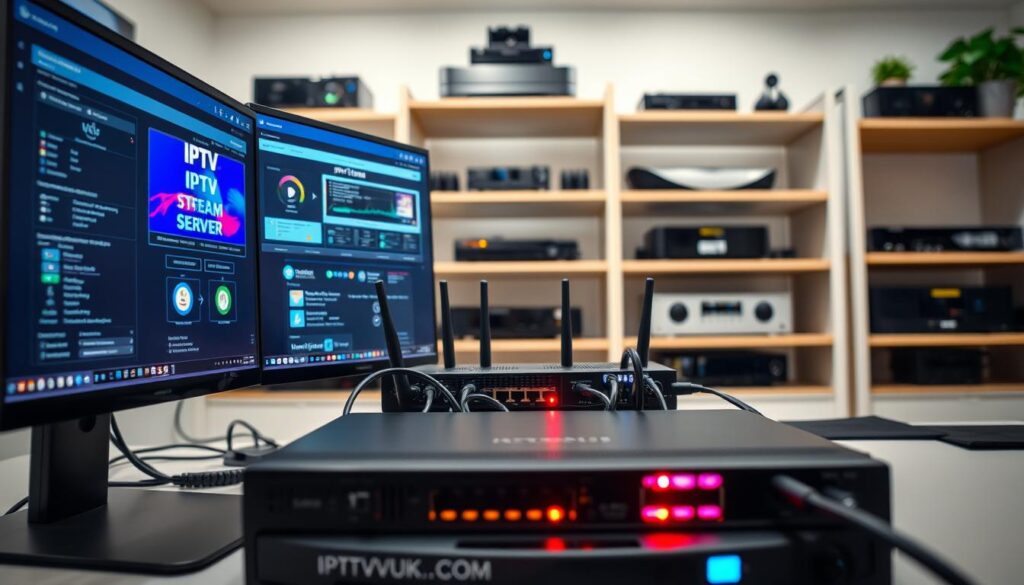
IPTV stream server setup involves several key steps, from hardware configuration to software installation. To ensure a smooth and efficient streaming experience, it’s crucial to carefully plan and execute each stage of the setup process.
Hardware Setup and Configuration
The hardware setup process begins with selecting the right server configuration based on your projected user base, channel count, and quality requirements. Our dedicated servers support a wide range of IPTV streaming software, including Telebreeze, Mware, Stalker, and Magoware. You can choose from various Linux and Windows operating systems or opt for a custom OS installation.
For a successful hardware setup, consider the following key factors:
- Processing power and memory requirements
- Bandwidth and network capabilities
- Storage options and scalability
Software Installation and Integration
Software installation involves deploying your chosen middleware solution, streaming server software, transcoding tools, and content management systems. For instance, you can use our dedicated console for root access to load your own operating system. Ensure that all components are properly integrated and communicating effectively.
Some popular middleware options include IPTV middleware solutions that support various devices and platforms.
Testing and Optimization
Testing should be comprehensive, covering various devices such as smart TVs, mobile devices, and set-top boxes, as well as different network conditions and user scenarios. Optimization is an ongoing process that involves fine-tuning transcoding settings, caching mechanisms, and network configurations to maximize performance while minimizing resource utilization and bandwidth consumption.
For optimal performance, consider using IPTV devices that support multiple streaming protocols and have robust customer support.
Scaling Your IPTV Business
Scaling an IPTV business requires careful planning and strategic decision-making to meet the increasing demand for streaming services. As the IPTV market continues to grow, projected to reach USD 67.6 billion by 2027, effective scaling strategies become crucial for maintaining high-quality streaming experiences and meeting customer expectations.
User Capacity Planning
Effective user capacity planning is essential for sustainable IPTV business growth. This involves regularly analyzing usage patterns, peak viewing times, and content popularity to anticipate infrastructure needs before they become bottlenecks. By doing so, you can ensure a seamless viewing experience for your users.
- Monitor usage patterns to identify peak viewing times
- Analyze content popularity to anticipate demand
- Adjust infrastructure accordingly to prevent bottlenecks
Infrastructure Growth Strategies
Implementing a phased scaling approach allows you to expand your IPTV service incrementally, adding server capacity, bandwidth, and content options as your subscriber base grows. This approach helps prevent overinvesting in underutilized resources. Consider leveraging cloud-based infrastructure components for flexibility during growth periods.
- Implement a phased scaling approach for incremental growth
- Utilize cloud-based infrastructure for flexibility
- Invest in Content Delivery Networks (CDNs) for consistent quality
As your IPTV service expands geographically, CDNs become increasingly important to ensure that users in different regions experience consistent quality and minimal latency when accessing your live channels and on-demand content. Moreover, customer support resources must scale alongside your technical infrastructure to handle the growing number of support requests.
Conclusion
With the IPTV industry projected to reach $67.6 billion by 2027, investing in the right infrastructure is vital. Selecting the right IPTV stream server is a critical decision that will significantly impact the quality, reliability, and scalability of your streaming service. Whether you’re serving a small audience or thousands of concurrent viewers, the best IPTV services balance powerful hardware specifications with optimized software solutions.
This balance ensures smooth delivery of live channels and on-demand content while providing room for future growth. As you evaluate your options, remember that technical specifications are just one part of the equation. Equally important are factors like customer support quality, content variety, user interface design, and overall viewing experience.
To make an informed decision, consider whether a dedicated server solution or an integrated system better suits your needs. For more information on how IPTV works, you can visit our detailed guide on how IPTV technology functions. Ultimately, your choice should align with both your current needs and future ambitions for your IPTV streaming business, ensuring a strong foundation for growth and customer satisfaction.